The Leadership Tax Nobody Talks About
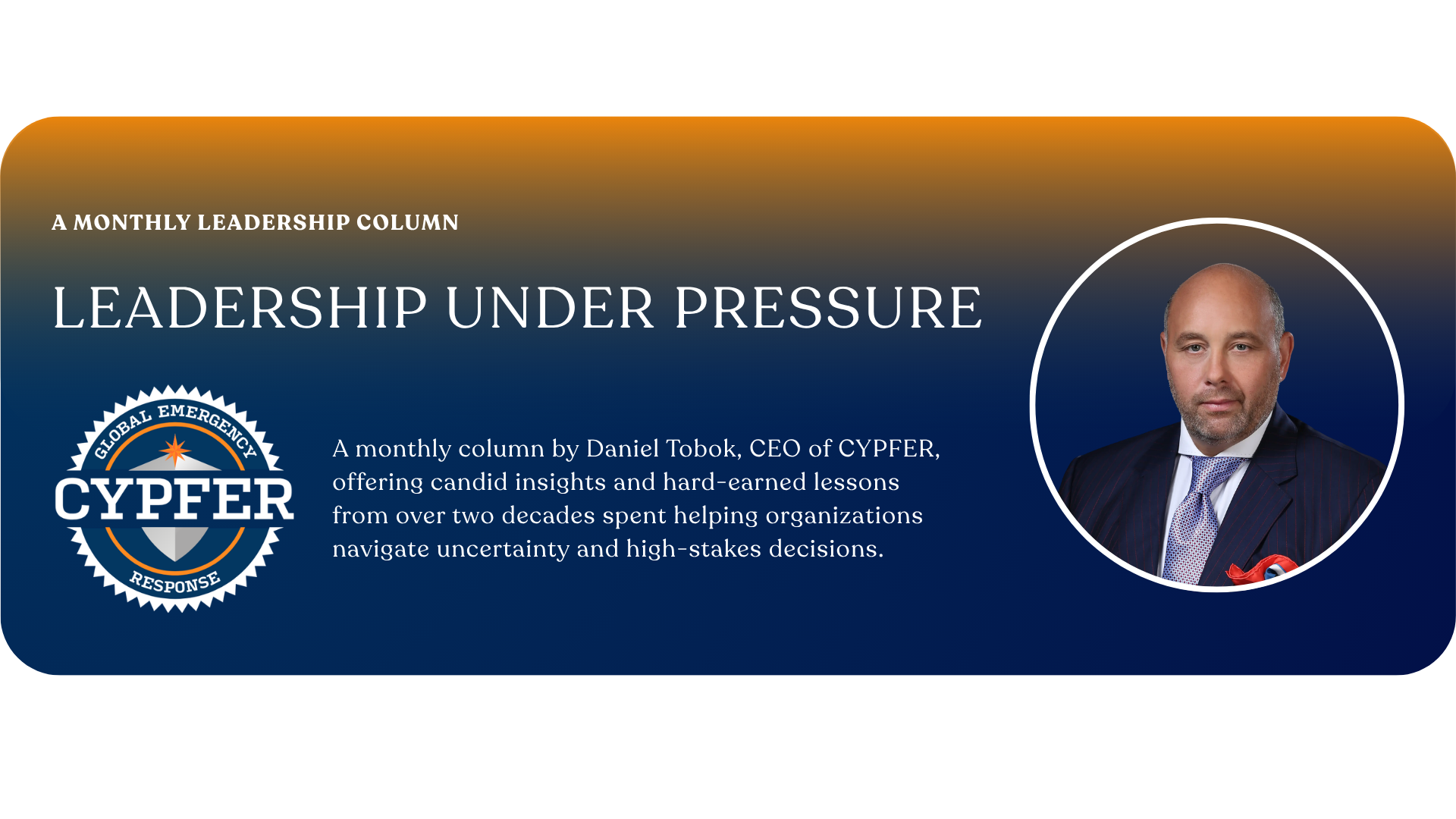
By Daniel Tobok, Founder & CEO, CYPFER

Every executive eventually discovers that success comes with an invoice.
It doesn’t arrive in the mail, and it certainly doesn’t appear on a balance sheet. Instead, it shows up at two o’clock in the morning when you’re replaying conversations in your head, questioning decisions no one else even knows you’re making. It follows you home, sits beside you at dinner and reminds you that leadership has far less to do with authority than accountability.
Over the past twenty years, I’ve worked alongside thousands of executives during ransomware attacks, cyber extortion events, nation-state activity, data breaches and operational crises. Every incident has been different, but the leadership lessons have been remarkably consistent.
Cybersecurity has a way of exposing leadership. It strips away presentations, strategies and carefully crafted plans. When an organization is under attack, perfect information doesn’t exist. Decisions that would normally take weeks are compressed into hours. Every conversation matters, every choice carries consequences, and leaders quickly discover that the hardest problems are rarely technical.
They’re human. The headlines focus on ransomware groups, financial losses and operational disruption. They rarely capture what happens behind closed doors, the CEO deciding how much to tell employees before all the facts are known, the board balancing transparency with shareholder responsibility, or the executive team trying to protect customers while keeping the business moving.
Those moments reveal something business schools rarely teach. Leadership has a cost, and I call it the leadership tax. Unlike financial taxes, this one can’t be delegated. Advisors can provide guidance, experts can offer recommendations and teams can present options, but eventually someone has to make the decision, accept the responsibility and live with the outcome.
That reality extends far beyond cybersecurity. Markets shift overnight. Artificial intelligence is reshaping industries. Supply chains break, regulations evolve and economic conditions change without warning. Every leader eventually faces moments where certainty disappears and judgment becomes the most valuable asset in the room.
One of the biggest misconceptions about leadership is that experience removes uncertainty. It doesn’t. Experience simply changes your relationship with it. The strongest leaders I’ve worked with aren’t the ones who always have the answers. They’re the ones who stay composed when the answers don’t yet exist. They understand that confidence isn’t created by pretending to know everything. It’s built by creating stability while everyone else searches for clarity.
That distinction matters. Decisiveness without judgment is simply speed. Great leaders know when to move quickly, when to slow the conversation down and when to ask one more difficult question before committing to a path forward.
What continues to surprise me after all these years is that organizations rarely remember the technical details of a crisis. They remember how they were led through it. Employees remember whether leadership communicated honestly. Customers remember whether trust was protected. Boards remember who stayed calm when the pressure was highest. Crisis doesn’t create culture, it reveals it.
That’s why leadership is built long before it’s tested. You can’t manufacture trust in the middle of an incident or suddenly create alignment when an organization has spent years operating in silos. The organizations that recover the fastest aren’t always the ones with the biggest cybersecurity budgets. More often, they’re the ones whose leaders have built trust, empowered their teams and created cultures where collaboration replaces politics.
When I founded CYPFER more than two decades ago, the goal wasn’t simply to build another cybersecurity company. It was to build a team capable of standing shoulder to shoulder with organizations during the moments that define them. Across hundreds of major incidents, one lesson has remained constant. Technology evolves. Threats evolve. Artificial intelligence evolves. Leadership doesn’t. Every crisis still comes down to people making difficult decisions under extraordinary pressure.
That’s the invisible side of leadership. The side that never appears in annual reports or keynote presentations. Leadership isn’t defined only by revenue growth, acquisitions or market share. It’s revealed in the willingness to make difficult decisions without complete information, to remain steady when uncertainty is at its highest and to put the interests of employees, customers and stakeholders ahead of personal comfort.
That’s the leadership tax. Every great leader pays it, not because they want to, but because responsibility comes with the role. After more than twenty years in cybersecurity, one lesson stands above all the rest.
Organizations rarely remember the technology that helped them through a crisis. They always remember the leaders who did.
About Daniel Tobok
Daniel Tobok is the Founder and CEO of CYPFER, a global cybersecurity and recovery-led incident response firm trusted by organizations around the world to respond to ransomware, cyber extortion and some of the most complex cyber incidents of the past two decades. Having worked alongside boards, executive teams and government agencies through high-pressure situations where every decision matters, Daniel shares perspectives on leadership, resilience and building organizations capable of performing when the stakes are highest.
Continue the Conversation
Leadership isn’t tested when business is predictable. It’s tested when uncertainty becomes unavoidable.
Each month, I’ll be sharing perspectives drawn from more than twenty years on the front lines of cybersecurity, executive leadership and crisis management. While many of these stories begin with a cyber incident, they ultimately explore something much bigger: how leaders build trust, make difficult decisions and guide organizations through moments that define them.
If these topics resonate with you, I invite you to follow the series and connect with me on LinkedIn. I look forward to continuing the conversation with leaders who believe that resilience is built long before it’s ever needed.

Your Complete Cyber Security Partner:
Every Step, Every Threat.



At CYPFER, we don’t just protect your business—we become part of it.
As an extension of your team, our sole focus is on cyber security, ensuring your peace of mind. From incident response and ransomware recovery to digital forensics and cyber risk, we integrate seamlessly with your operations. We’re with you 24×7, ready to tackle threats head-on and prevent future ones.
Choose CYPFER, and experience unmatched dedication and expertise. Trust us to keep your business secure and resilient at every turn.

Get Cyber Certainty™ Today
We’re here to keep the heartbeat of your business running, safe from the threat of cyber attacks. Wherever and whatever your circumstances.
Contact CYPFER