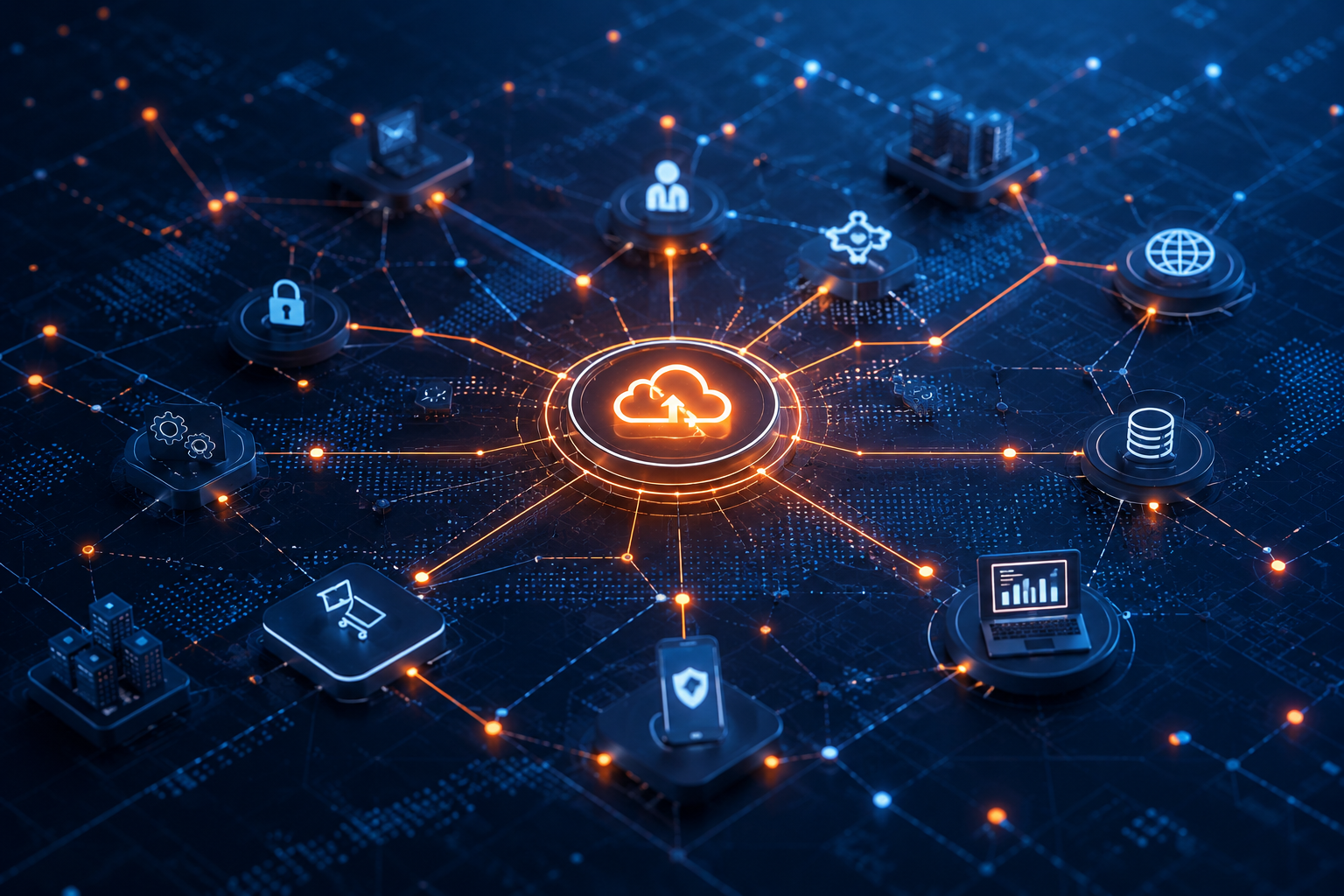
SaaS platforms don’t operate in isolation.
They’re deeply connected to the systems that run your business, often through integrations that extend far beyond the application itself. When attackers compromise a trusted SaaS provider, the impact can extend well beyond a single platform, creating a pathway into the environments of downstream customers.
The latest Klue security incident is an example of that risk playing out in real time. While the investigation is still ongoing, the attack highlights how compromises involving SaaS integrations and OAuth access can quickly evolve into a broader supply-chain security issue. Regardless of which SaaS tools your organization relies on, it’s a case worth understanding.
It remains unclear how the incident involving the Klue platform will ultimately unfold, but several key facts have emerged so far.
Klue is a competitive intelligence and win-loss analysis platform primarily used by B2B organizations. The platform helps product marketing, sales enablement, strategy, and executive teams better understand competitors, analyze why deals are won or lost, and provide sales teams with actionable competitive intelligence.
How the Attack Unfolded
Around June 11, 2026, threat actors reportedly gained access to Klue’s infrastructure. According to available information, the attackers obtained legacy credentials associated with Klue’s backend integration environment, which allowed them to access OAuth tokens used to authenticate to customers’ Salesforce environments. The attackers subsequently exfiltrated customer data.
On June 13, customers received initial notifications indicating that integration-related issues had been identified.
By June 16, some affected organizations began receiving extortion emails from the Icarus ransomware group.
On June 19, Icarus published a statement on its data leak site (DLS), urging Klue to reach a “swift resolution” and threatening to release data allegedly stolen from Klue customers.
As of June 25, Icarus’ data leak site, file servers, and Tox messaging account appeared to be offline. Meanwhile, Klue has temporarily disconnected certain integrations while continuing its investigation and incident response efforts.
At this stage, the Klue incident appears to be one of the most significant SaaS supply-chain compromises of 2026. Unfortunately, it is unlikely to be the last. The incident highlights several important lessons for organizations that rely on third-party SaaS integrations and interconnected cloud ecosystems.
Organizations should consider:
- Reviewing all third-party OAuth integrations and validating their necessity.
- Applying least-privilege principles to SaaS integration permissions and scopes.
- Monitoring OAuth token issuance, usage, and anomalous API activity.
- Regularly rotating integration credentials, secrets, and access tokens.
- Restricting integration access through IP allowlists, conditional access policies, or equivalent controls where feasible.
- Treating SaaS integrations as part of the organization’s attack surface and incorporating them into threat hunting, detection engineering, and incident response activities.
- Maintaining an accurate inventory of third-party applications with access to sensitive business data.
- Reviewing vendor security practices and incident response notification procedures for critical SaaS providers.
What Security Teams Should Be Left With
The Klue incident serves as another reminder that a compromise of a trusted SaaS provider can quickly become a compromise of multiple downstream organizations, often without requiring direct access to the victims’ environments.
If your organization relies on third-party SaaS integrations, and almost every organization does, now is the time to evaluate your exposure, review your integration security, and ensure you’re prepared to respond if a trusted vendor is compromised.
CYPFER has managed thousands of ransomware incidents and helped organizations navigate complex cyber crises, including those involving third-party and supply-chain risks. To learn what a recovery-first approach looks like and how to strengthen resilience before an incident occurs, explore CYPFER’s Ransomware Recovery Services and CYPFER’s CYCOMMS Services.
Your Complete Cyber Security Partner:
Elke stap, elke dreiging.



At CYPFER, we don’t just protect your business—we become part of it.
Als uitbreiding van je team ligt onze focus exclusief op cybersecurity, voor jouw gemoedsrust. Van incidentenrespons en ransomwareherstel tot digitaal forensisch onderzoek en cyberrisico’s, wij integreren naadloos met je bedrijfsactiviteiten. We staan 24 uur per dag, 7 dagen per week voor je klaar om dreigingen de kop in te drukken en ze voor de toekomst te voorkomen.
Als je voor CYPFER kiest, ervaar je ongeëvenaarde toewijding en expertise. Vertrouw op ons om je bedrijf te allen tijde veilig en weerbaar te houden.

Ga vandaag nog voor Cyber Certainty™
Wij zorgen dat het hart van je bedrijf blijft kloppen en beschermen je tegen cyberaanvallen. Waar je ook bent, wat de situatie ook is.
Neem vandaag nog contact op met CYPFER